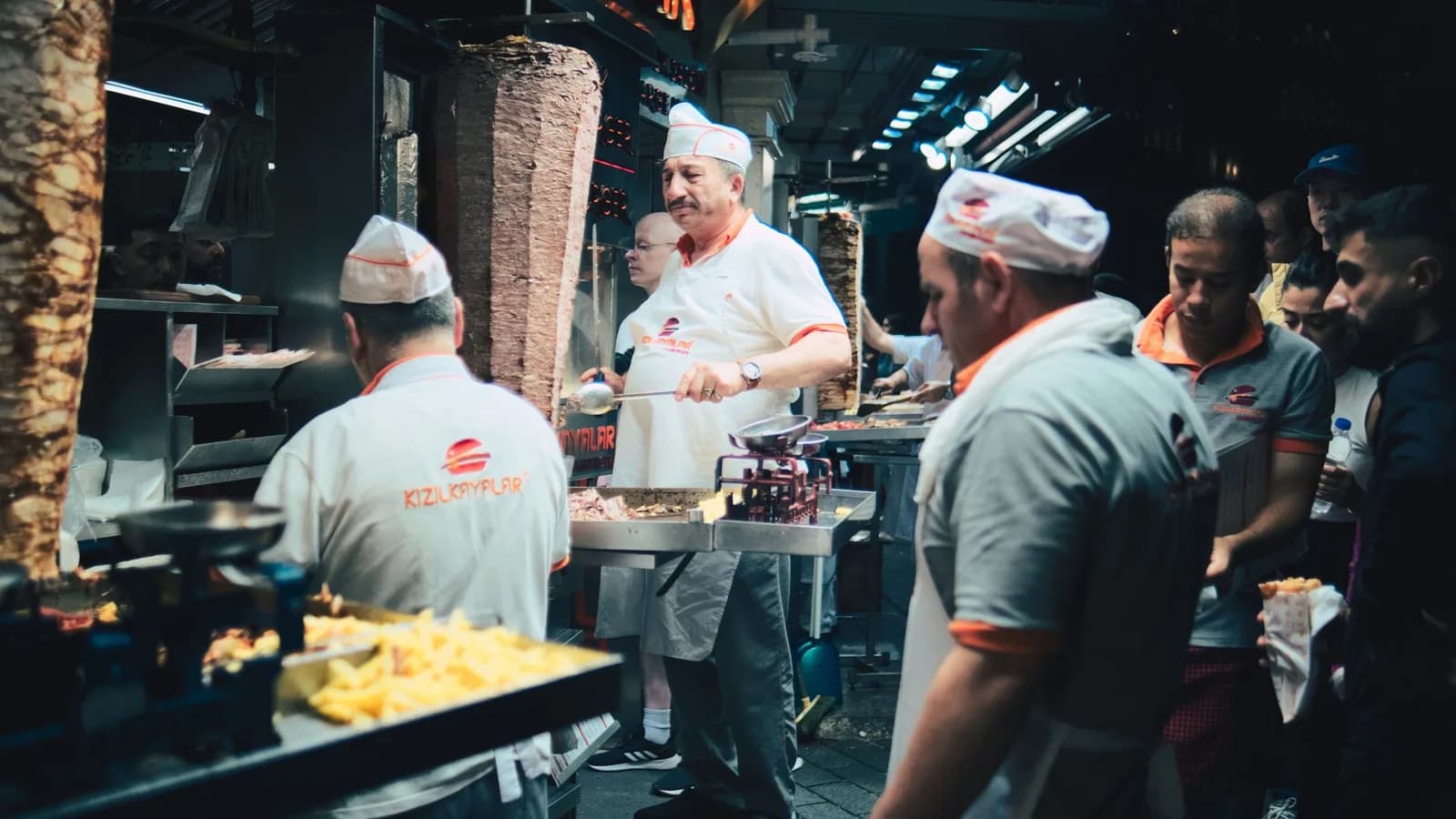
A great kebab shop gives itself away in the first thirty seconds, long before you taste anything: the lamb percentage on the spit, the char on the outer edge, bread warmed to order, and salad that looks like food rather than garnish. Knowing what makes a great kebab shop means you can walk into somewhere new and read the quality straight off the counter. Here are the seven signs to look for, plus an honest account of how Kebys in Great Barr measures up against each one.
What makes a great kebab shop?
A great kebab shop treats a doner as cooking, not assembly. That comes down to seven things you can check with your own eyes: a high lamb percentage, real char on the spit, bread warmed to order, fresh salad, sauces made in the kitchen, cook-to-order on everything off the spit, and independent ownership. Get most of those right and the food follows. Miss them and no amount of neon signage will rescue the kebab.
None of this is insider knowledge. You do not need to have worked in a kitchen to spot a shortcut. You just need to know where to look, and the rest of this guide walks through each sign in turn.
1. A high lamb percentage in the doner
This is the single biggest variable. A standard UK takeaway doner sits at roughly 60 to 80 percent lamb, with rusk, water and binders making up the difference. That is where the uniform, faintly sweet, slightly dense texture of a cheap doner comes from.
A great kebab shop uses 85 percent lamb or higher, ideally 90 percent and above. The seasoning stays plain (salt, pepper, garlic, oregano and cumin) because good meat does not need masking. Ask the question at the counter. A confident shop will tell you the percentage without flinching. A vague answer is itself the answer.
At Kebys, the doner is over 90 percent Cypriot lamb. The remaining tenth is seasoning and the water needed to bind the spit. No rusk, no filler. If you want the longer story behind that sourcing, our guide to the best lamb doner in Great Barr breaks down exactly why it matters.
2. Visible char on the outer spit
Look at the spit itself. If it is a smooth, uniformly pale column, the element is not hot enough, or the meat is being shaved away too quickly to build a proper crust. A good spit shows blackened, caramelised patches on the outer edge where the lamb has been meeting the heat for hours. That charred outer layer is the best bit, and a shop that knows what it is doing will slice it straight into your bread.
A bad spit looks factory-fresh. A good one looks lived-in.
3. Bread that's warmed to order
Fresh bread is one of the quietest tells. A great kebab shop warms your pitta or naan at the moment it builds your kebab, not three hours earlier. Warmed-to-order bread is soft, pliable and lightly toasted at the edges. Bread that has been sitting on a warmer goes leathery within twenty minutes and cracks when you fold it.
Watch the counter as you order. Does the chef pull a fresh pitta onto the heat, or lift one off a pile that has been sitting there since the shift started?
4. Salad that looks like food, not garnish
The salad in a proper doner is prepared fresh that day: crisp lettuce, genuinely red tomatoes, red onion that has not oxidised to brown, and shredded cabbage with a bit of bite. It should be loaded generously, not three tired leaves tucked under the meat to bulk out the wrap.
It is a small thing that reveals a big one. A shop that cannot be bothered to prep decent salad is unlikely to be fussy about anything else. That fresh veg earns its place too. The NHS guidance on a balanced diet is a good reminder that a properly loaded doner salad is doing more work than people give it credit for.
5. Sauces made in the kitchen
Here is a quick signal: are the sauces in branded plastic bottles from a catering supplier, or in hand-labelled tubs? The better shops make at least their flagship sauces in-house. It costs more time and money, and you can taste the difference in a garlic mayo or a chilli mayo that was mixed that morning. A proper kitchen mayo is barely more than eggs, oil and seasoning, much like a classic homemade mayonnaise.
At Kebys, the chilli mayo is made in-house, and the wider range blends house-prepared sauces with quality supplier lines rather than defaulting to the cheapest option on the shelf.
6. Cook-to-order on everything off the spit
The spit runs continuously by design, but everything else should only hit heat when your order lands:
- Burgers: the patty goes on the grill when the ticket prints, not before.
- Fries: into the fryer at order time, served hot and crisp.
- Pizzas: shaped and topped to order, never pre-built and reheated.
If your fries arrive lukewarm or your burger is room temperature, something was cooked in advance and left to wait. That is a fail. At Kebys, burgers are grilled to order, fries are fried to order, and every pizza is hand-stretched and topped only once you ask for it.
7. Independent ownership, named on the door
This one is softer but real. An independent can choose better meat, slower cooking and a shorter, sharper menu, because it answers to its regulars rather than a franchise cost model. A chain has to optimise for consistency at scale, which usually means standardised, lower-percentage meat and high-throughput cooking.
Look for family names on the signage, a single location rather than a dozen branches, and a chef who actually knows the menu and the regulars. You can also cross-check a shop's food hygiene rating before you visit, since every registered food business in the country is listed. Kebys is independent, single-location and family-run, and it opened in 2026 to serve Great Barr and the surrounding B43 and B42 postcodes.
How can you tell if the meat is good quality?
The fastest test is to ask the lamb percentage and watch how the answer comes back. A good shop quotes a number without hesitation. 90 percent or above is excellent, 80 to 90 percent is decent, and anything below 70 percent means filler is doing the heavy lifting. After that, trust your eyes. Look for real char on the spit, meat that is juicy rather than dry and crumbly, and a plain, savoury smell rather than a heavy, sugary one.
Seasoning is the next clue. Traditional doner seasoning is a short list: salt, pepper, garlic, oregano and cumin. The doner kebab has its roots in Ottoman-era grilled meat, and the classic spice mix was built to complement good lamb, not disguise poor meat. When a doner tastes aggressively sweet or artificially spiced, that flavour is often covering for a cheaper cut. Our beginner's guide to the types of kebab is a useful next read if you want to tell doner, tikka and mixed meat apart with confidence.
Should a kebab shop cook everything to order?
Almost everything, yes, with one deliberate exception. The doner spit is meant to roast continuously through the shift, so the meat is always ready but sliced fresh the moment it goes into your bread. Everything else (burgers, fries, pizzas, chicken strips) should only meet heat once your order is placed. A shop that pre-cooks burgers and holds them under a lamp, or fries a batch of chips to sit in a tray, is trading quality for speed.
You can often hear it as much as see it. A grill firing up and a fryer basket dropping in after you order is a good sign. Silence, followed by food arriving suspiciously fast and only lukewarm, is not.
Are independent kebab shops better than chains?
More often than not, yes. Independents can use better meat, slower processes and fresher prep because they are built around repeat local custom rather than a national cost-per-unit target. That said, quality still varies from one independent to the next, which is exactly why the seven-sign checklist matters. It lets you judge any shop on the food in front of you rather than the name over the door.
One honest note: a few things that look like quality signals really are not. A huge menu can mean a shop does eighty things averagely rather than four things brilliantly. A flashy fit-out tells you nothing about the spit. Late opening does not guarantee a fresh spit at midnight, and rock-bottom prices usually point straight back to filler meat. Mid-tier pricing, roughly £7 to £9 for a proper doner, is the honest sweet spot.
How does Kebys score on the checklist?
Against the seven signs, here is where Kebys lands:
| Sign | At Kebys |
|---|---|
| 90 percent-plus lamb in the doner | Yes, over 90% Cypriot lamb |
| Visible char on the spit | Yes, slow-roasted across the 4pm to 10pm shift |
| Bread warmed to order | Yes, every pitta and naan |
| Fresh, properly loaded salad | Yes, prepared daily |
| Sauces made in the kitchen | Yes, chilli mayo made in-house |
| Cook-to-order off the spit | Yes, burgers, fries and pizzas |
| Independent and family-run | Yes, single location, opened 2026 |
For the wider picture, our welcome guide to Kebys in Great Barr covers the full menu, and the history of the doner kebab explains why Cypriot lamb earns its place on the spit.
Where can you find a great kebab shop near Great Barr?
Kebys is at 3 Bowstoke Road, off Newton Road, Great Barr, Birmingham B43 5EB, with free parking right outside. The kitchen is open Tuesday to Saturday 4pm to 10pm and Sunday 3pm to 8pm, closed Monday. order online at kebys.co.uk to collect, or order delivery through the apps across Great Barr, Perry Barr, Kingstanding, Hamstead and Pheasey, and out towards Streetly and Sutton Coldfield, via Uber Eats, Just Eat and Deliveroo. You can follow the spit and the day's specials on @kebysuk.
If you would rather size a shop up before you buy, its Food Standards Agency hygiene rating is public, like every registered food business in the country, so you can check the kitchen standards first.
FAQs
How can you tell if a kebab shop uses good meat?
Ask the lamb percentage of the doner, a good shop will tell you. 90%+ is excellent; 80 to 90% is decent; below 70% means filler. Look for proper char on the outer edge of the spit, not just a uniform brown.
What's the sign of a fresh kebab shop?
Fresh salad in a clean tray, a spit that's been running for hours, and bread that's warmed to order, not pre-warmed and sitting.
Should kebab shops cook to order?
Almost everything, yes. The doner is slow-roasted on the spit through service, so the meat is always ready but sliced fresh. Everything else (burgers, fries, pizzas) should only meet heat once your order is placed.
Why does the seasoning matter?
Traditional doner seasoning is salt, pepper, garlic, oregano and cumin. Shops using sweeter, more aggressive seasonings are usually masking lower-quality meat.
Are independents better than chains for kebabs?
Almost always. Chains optimise for consistency at scale; independents can use better meat and slower processes, though quality still varies by shop.
What should a good doner cost?
Mid-tier pricing is the honest sweet spot, roughly £7 to £9 for a proper lamb doner. At Kebys the Lamb Doner is £7.79. Bargain prices usually mean filler meat, so very cheap is rarely a good sign.
Written by
Kebys Team
Stories from the Kebys kitchen, Great Barr
Share this article